← Back to Blog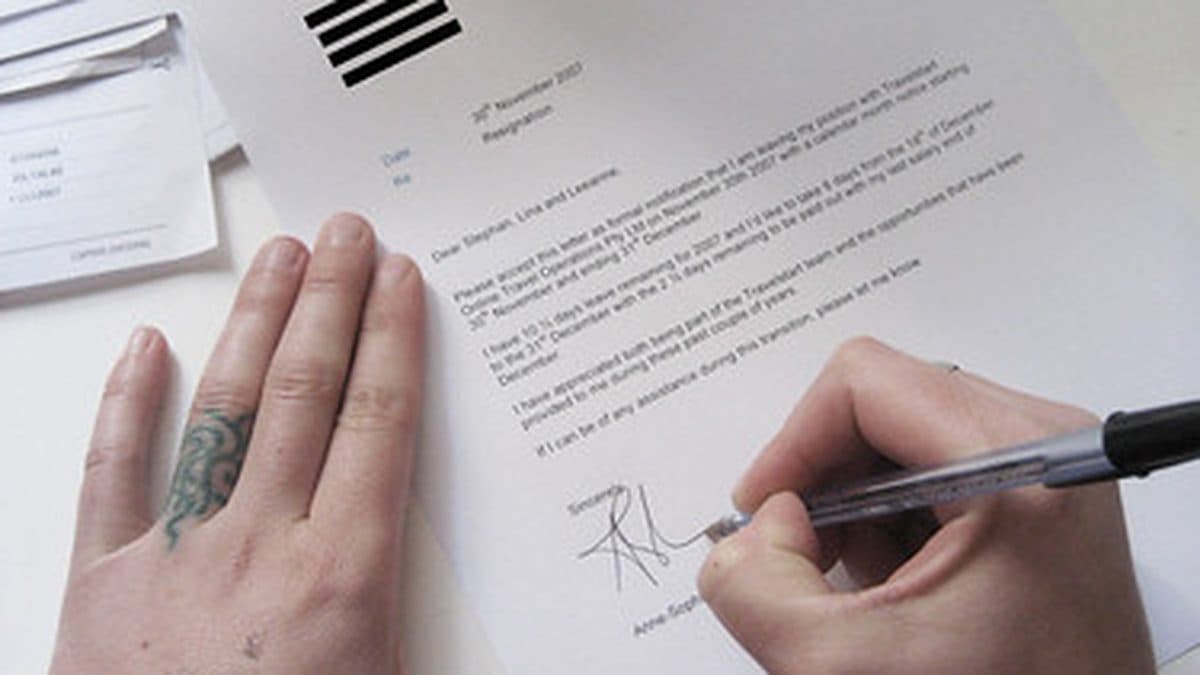

 Browse Questions Free
By Kareera Team · July 27, 2026 · 5 min read
How to Resign Professionally in the Philippines (Sample Letter Included)
Resigning from a job can be nerve-wracking, even when the next opportunity is exciting. You might worry about burning bridges, handling awkward conversations, or making sure you get your final pay without a hitch. The good news is that Philippine labor law provides a clear framework, and when you follow it, you can leave on good terms while protecting your rights. This guide walks you through the legal requirements, practical steps, and a sample resignation letter you can adapt right away.
The 30-Day Notice Rule: What the Law Says
Under Article 300 of the Labor Code of the Philippines, an employee who wants to resign without a just cause must give the employer a written notice at least 30 days in advance. This notice period isn't just a formality; it gives your employer reasonable time to find and train a replacement, and it allows you to wrap up your work properly. The notice must be in writing, and you should clearly state your intent to resign, ideally with your intended last working day.
Importantly, the 30-day notice is primarily for the employer's benefit. That means your employer can choose to waive all or part of it and let you leave earlier. If you ask for a shorter notice period, it's entirely up to them. If you resign without serving the full 30 days and without a valid just cause, the employer might hold you liable for actual damages, but only for provable financial losses directly caused by your abrupt departure. This isn't an automatic penalty; the employer would need to substantiate the claim with evidence.
When You Can Resign Immediately
The law also lists specific situations where you don't have to serve the 30-day notice. These are considered just causes, and they allow you to resign effective immediately. According to Article 300, these include:
Serious insult by the employer or their representative on your honor and person
Inhumane treatment by the employer or their representative
Commission of a crime or offense by the employer or their representative against you
Other analogous causes that are serious and compelling enough to make continued employment unreasonable
These reasons are fact-dependent. Simply feeling that your workplace is "toxic" isn't automatically enough; you would need to point to specific incidents that meet the legal standard of seriousness. If you resign for one of these justifiable reasons, you won't owe damages or face pay deductions for not serving notice.
How to Resign Professionally: A Step-by-Step Guide
Resigning professionally helps preserve relationships and your reputation. Here's a practical sequence to follow.
1. Tell your direct manager first. Before sending any formal letter, have a conversation in person, or at least a call or video call if face-to-face isn't possible. This shows respect and prevents your boss from being blindsided when the letter arrives.
2. Write a short, professional resignation letter. The letter should state your position, your last working day (calculated to meet the 30-day notice unless your employer agrees to a shorter period), a brief and neutral reason for leaving, a thank-you, and an offer to help with the transition. Avoid airing grievances in the letter; that document becomes part of your employment record. If you have serious complaints, address them through HR or a formal channel separately.
3. Offer concrete transition help. Document your ongoing tasks, train a colleague who will take over, and make yourself available for questions during your remaining days. This goodwill goes a long way.
4. Update your contact information. Make sure HR has your current phone number, email, and mailing address so your Certificate of Employment (COE) and final pay can reach you without delays.
Sample Resignation Letter
Here's a template that follows all the guidelines above. Just fill in your details.
Preparing for an interview?
Get free access to 1000+ interview questions across top companies and roles.
[Date]
[Manager's Name]
[Company Name]
Dear [Manager's Name],
I am writing to formally resign from my position as [Job Title] at [Company Name], effective [Last Working Day, calculated 30 calendar days from this letter's date]. This is in compliance with the 30-day notice period required under the Labor Code.
I've genuinely valued my time here and I'm grateful for the opportunities to grow that [Company Name] has given me. After careful thought, I've decided this is the right time for me to move on to a new opportunity that aligns with my long-term career goals.
I want to make sure the transition is as smooth as possible. I'm happy to help document my current tasks, train whoever takes over my responsibilities, and answer questions during my remaining time here.
Thank you again for the experience and support. I look forward to staying in touch.
Respectfully,
[Your Name]
Your Final Pay, Clearance, and Certificate of Employment
Once you've handed in your resignation, it's time to focus on a clean exit and your financial entitlements. DOLE Labor Advisory No. 06-20 sets the rules.
Final pay must be released within 30 days from your last day of work, unless your company has a more favorable policy, individual contract, or collective bargaining agreement.
Final pay typically includes: unpaid salary up to your last day, pro-rated 13th month pay, monetized unused leave credits (if convertible under company policy or contract), and any other earned benefits.
Most companies require a clearance process before releasing final pay. This means returning company property (laptop, ID, uniform, tools) and settling any outstanding cash advances or accountabilities. It's a standard practice, so expect it.
Certificate of Employment (COE) must be issued within 3 days of your request. The same advisory covers this.
If your employer doesn't release your final pay within the required period, your first step is to file a request for assistance with the nearest DOLE field office through the Single Entry Approach (SENA). SENA is a mandatory conciliation-mediation process. If that fails, you can escalate to a formal money claim with the National Labor Relations Commission (NLRC).
Check Your Employment Contract
This guide covers the general rule for private-sector employees under the Labor Code. However, your own employment contract might specify a longer notice period than 30 days. If it does, that contractual obligation typically prevails, so you'll need to comply with that longer period to avoid potential liability. Also note that government employees, probationary employees, and certain special employment types may have different rules not covered here. Always review your contract and, if in doubt, consult with HR or a labor expert.
Resigning doesn't have to be messy. Understand your legal obligations, communicate respectfully, and document everything. A professional exit keeps doors open and helps you transition to your next chapter with confidence.
FAQs
Can my employer refuse my resignation?
No. An employer cannot force you to stay. Under Philippine law, resignation is a voluntary act by the employee. However, you must still comply with the notice period unless a just cause for immediate resignation applies.
What if I resign because my workplace is toxic? Can I leave immediately?
It depends on the severity. The law allows immediate resignation for serious insult, inhumane treatment, or analogous causes. Simply labeling the workplace "toxic" is not enough; you need specific, serious incidents that make continued employment unreasonable. If in doubt, document the issues and consult with a labor lawyer or DOLE.
What should I do if my employer does not release my final pay after 30 days?
First, follow up in writing. If they still refuse, file a request for assistance at the nearest DOLE field office under the Single Entry Approach (SENA). This conciliation-mediation process often resolves the issue. If it doesn't, you can file a formal labor complaint with the NLRC.
Do I have to state my reason for resigning in the letter?
No, you are not legally required to state your reason. It's up to you. A brief, neutral statement like "pursuing another career opportunity" is common and keeps the letter positive.